As we reach the midpoint of 2026, we are pleased to share highlights of the Observatory on Latin America’s recent work advancing research, dialogue, and international collaboration.
Over the past several months, our activities have brought together scholars, policymakers, practitioners, and artists from around the world to examine issues ranging from urban uncertainty and climate change to feminist foreign policy, spatial economic planning, and imagined futures from the Global South.
This edition showcases conferences, book launches, and collaborative initiatives that reflect our commitment to fostering interdisciplinary exchange and building partnerships. We were also pleased to welcome a new visiting fellow over the last few months and to share updates from the 2084 Imagined Futures from the South program, whose recent activities in Medellín demonstrate the power of creative practice to address climate change and the health of the planet.
We hope these highlights offer a glimpse into the breadth of our work and our growing community of collaborators.
Recent Events
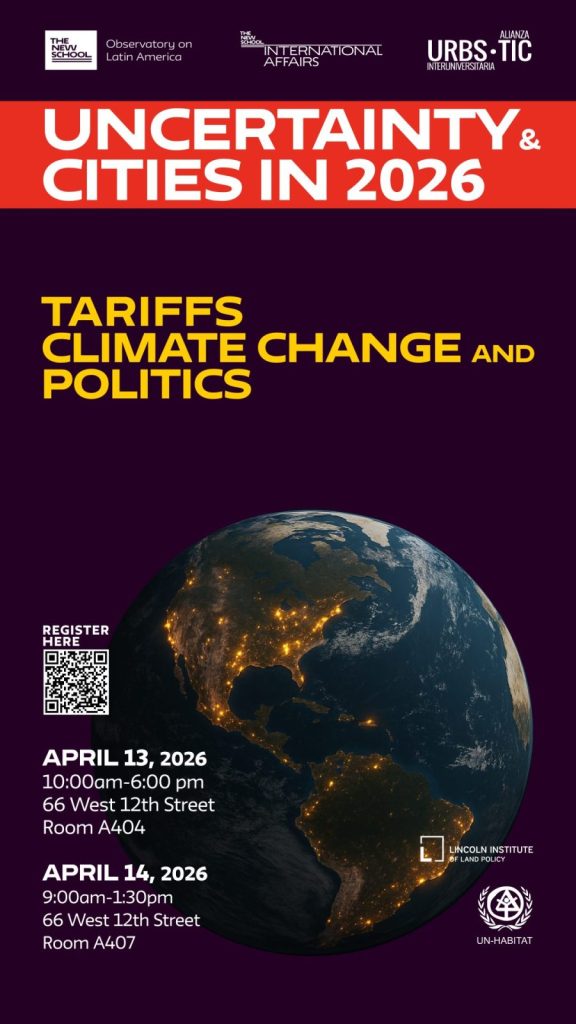
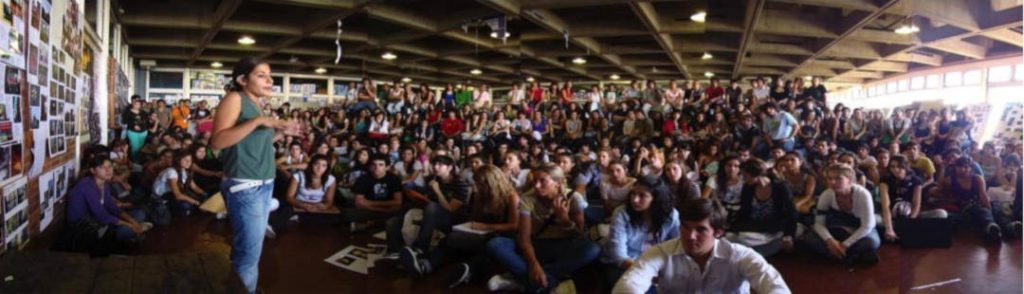
On April 13-14, the OLA and URBSTIC, a network of Latin American researchers, organized a conference titled “Uncertainty and Cities in 2026: Tariffs, Climate Change, and Politics.” The conference included perspectives from different international, national, and local institutions on the global economy and cities, and particularly the impact of the tariffs on urban economies and local governments in both the Global South and Industrialized Economies, the challenges of climate change, and the new politics of urban uncertainty and precarity. 25 speakers participated in the event which was attended by over 120 people, and included academics from 11 countries. Several notable speakers were: Fernando Carrion, the President of URBISTIC; Marcelo Corti, Director of the online journal Cafe de Ciudades; Patrica Ramirez Kuri, President of the Planning Institute of Mexico City; Jesus Gonzalez, Professor of Universidad de Baleares, Spain; and other researchers; Ana Swanson, economics columnist and David Wallace-Wells, feature columnist, both of The New York Times; Enrique Silva, Chief Program Officer of The Lincoln Institute of Land Policy in Cambridge, Mass.; and numerous New School faculty including William Milberg, Sakiko Fukuda-Parr, Michael Cohen, and doctoral students. Read more
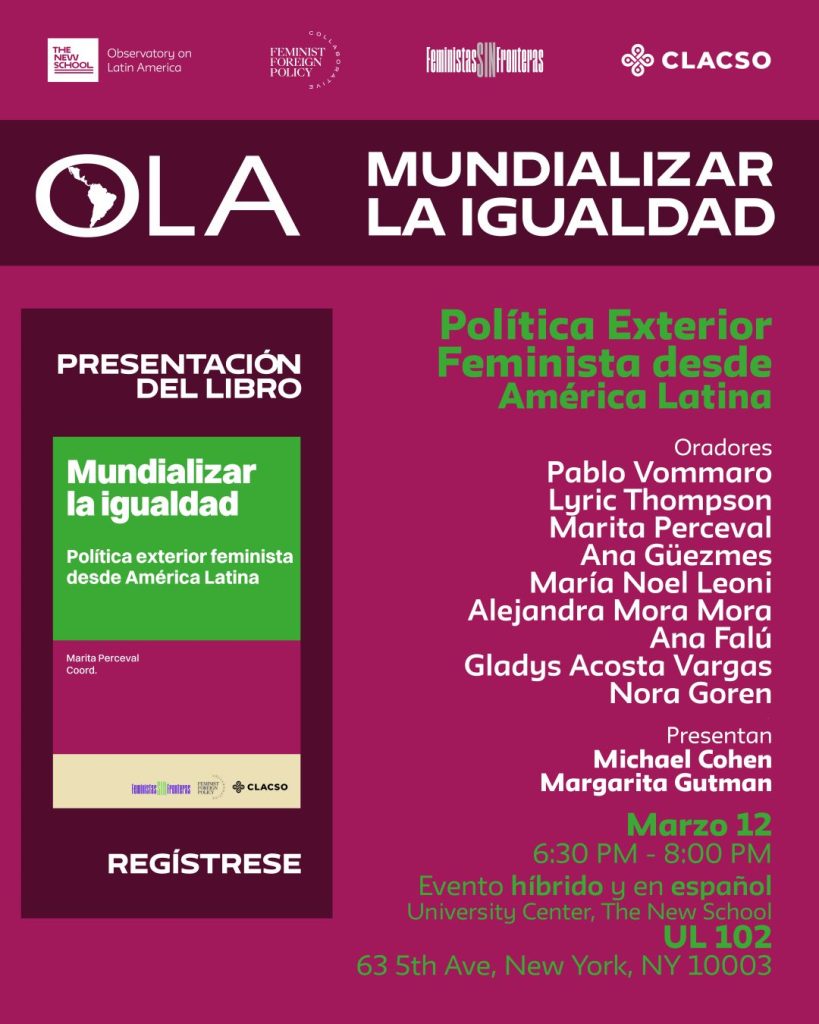
On March 12, the OLA hosted the book launch for Mundializar la Igualdad: Política Exterior Feminista desde América Latina with Feminist Foreign Policy, Feministas Sin Fronteras, and CLACSO. Faced with the multiplication of planetary crises, the worsening of inequalities, and the acceleration of what already seems like an arithmetic of disaster, this collective book proposed feminist foreign policy (FFP) as a transformative strategy to globalize equality. The leader of this project was Maria Perceval, former Argentine Ambassador to the United Nations, and former Senator in Argentina. With voices from diplomats, academics, and activists of the Global South, the volume places the feminist agenda at the center of geopolitics and international relations, articulating recognition, redistribution, and intersectionality. It proposes reconfiguring democracy, strengthening the governance of common goods, depatriarchalizing power, and advancing toward a society of care and economic, social, and environmental justice.
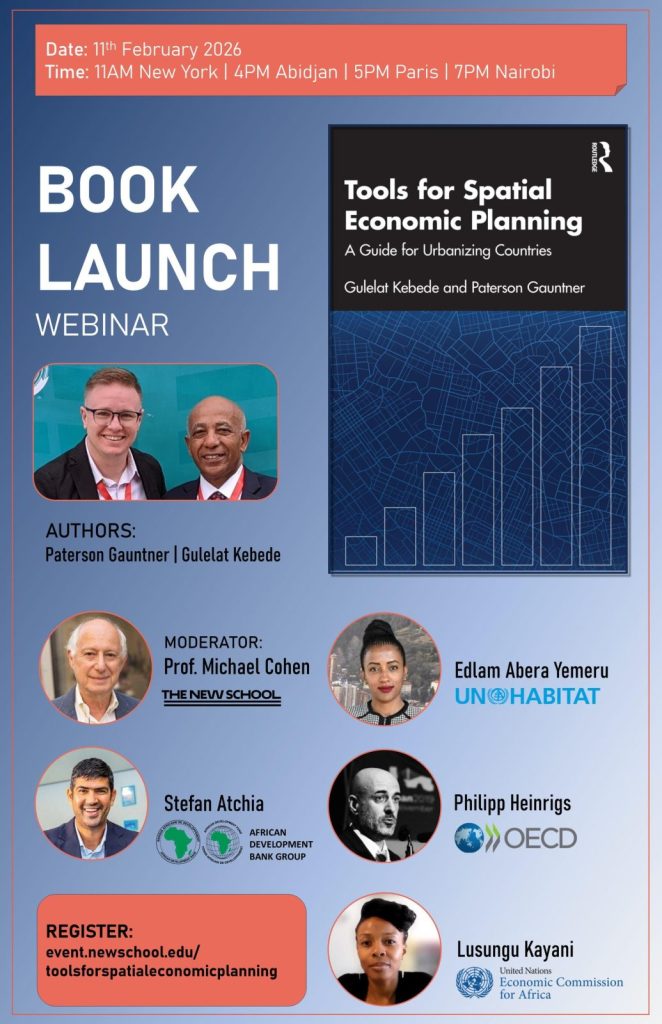
On February 11, the OLA hosted an online book launch for Tools for Spatial Economic Planning, written by Gulelat Kebede, former Chief of the Urban Economy Branch of UN Habitat, and Paterson Gauntner, and published by Routledge. Urbanization is a transformative force, and guiding the evolving spatial and economic structure is an urgent and high-stakes task. Tools for Spatial Economic Planning offers hand-on guidance on a variety of analysis and policy instruments suited for this task, with real world case studies to illustrate their use. The book’s authors provided an overview of the spatial economic tools in the book. Then, representatives of major development organizations provided their perspectives, giving a snapshot of their work in the field of spatial economic planning. Panelists included representatives from the African Development Bank, UN-Habitat, the UN Economic Commission for Africa, and OECD, with moderation by the New School.

“Detectives of the Future” Exhibition and activities at the Universidad de Antioquia, Medellín, Colombia March 21, 24, and 25, 2026

Representing the 2084 Imagined Futures from the South program, Martín Gromez visited Medellín and strengthened alliances including the PACCSA Plan of the Universidad de Antioquia, Medellín, Colombia.
The visit was organized under the invitation of the Plan de Adaptación al Cambio Climático desde Salud Ambiental —PACCSA— (Climate Change Adaptation Plan from Environmental Health) of the Universidad de Antioquia (UdeA). Centered on the inauguration of the exhibition “Detectives of the Future”. This was the culmination of a year of collaboration of OLA with the University of Antioquia through its Faculty of Public Health, together with the Antioquia Scout Region. This resulted in activities with the Scouts captured in 30 videos that you can see in our 2084 Museum of the Future and constitutes the material that is exhibited at the Museo de la Vida (Museum of Life) in Medellín. The visit helped establish connections for future international collaborations, disseminate the principles of the 2084 program, and delve into topics such as the convergence of knowledge around art, social inclusion, and global public health.
If you happen to be in Medellín it will be on exhibition (@ La Naviera building) free and open to the public until the end of the second semester.
For more information see here.
Watch one of the 30 “Detectives of the Future” project videos.
“Special Rooms”, Museum of Futures new section
Here we share practices, methodologies, and narratives that emerge from collective calls for imagination arising from our allied communities, organizations, and activists who are mobilizing visions of the future. Discover processes and conversations that expand the Museum of Futures.
Visiting Fellow, Frederico Poley
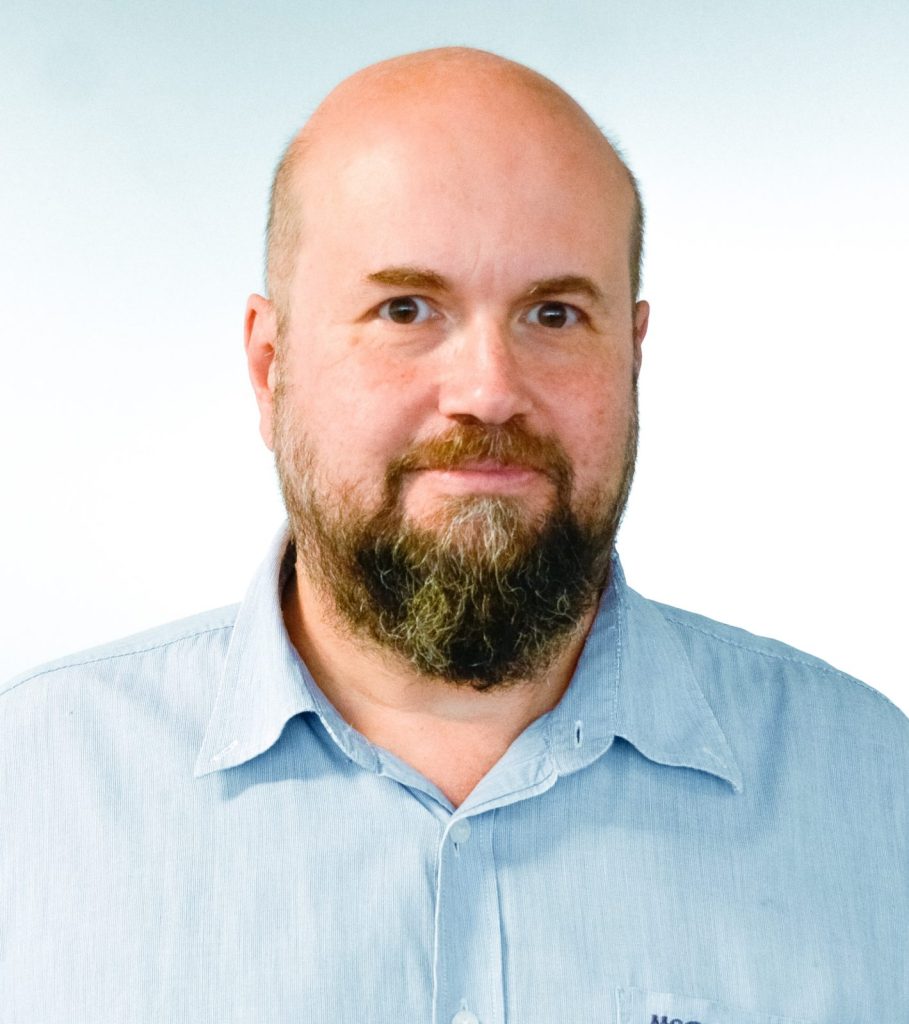
Frederico Poley, our visiting fellow for the last few months, is a professor in the Public Management Program within the Department of Political Science at the Universidade Federal de Minas Gerais (UFMG) and a researcher at Fundação João Pinheiro, where he has coordinated the calculation of Brazil’s housing deficit index; both in Belo Horizonte, Brazil. During his semester at OLA/The New School, he engaged in academic seminars, connecting with specialists, faculty members, and graduate students. His time at the OLA enabled him to develop and complete two research papers/articles on housing and urban public policies in Brazil and Latin America, presenting one at an internal seminar. Read his letter
– – – o – – –
Thank you for reading our mid-year update and for being part of the Observatory on Latin America’s growing community of partners, collaborators, and friends. We look forward to continuing these conversations and collaborations in the months ahead as we advance research, foster dialogue, and work together toward more equitable, resilient, and sustainable futures. We wish you a productive and enjoyable remainder of the year and hope to see you at our upcoming events.
Tags: 2084, Book Presentation, Fellows, Feminism, Future, Human Rights, News, Newsletter, Politics, Public Policy, Research, Urban Inequity