This report summarizes the Conference of April 13-14, 2026, organized by the Observatory on Latin America of The New School and URBISTIC, a network of Latin American urban researchers. The report includes the following subjects: Achievements of Conference and Assessment of Program Sessions, and Recommendations and Follow-up.
Achievements of Conference
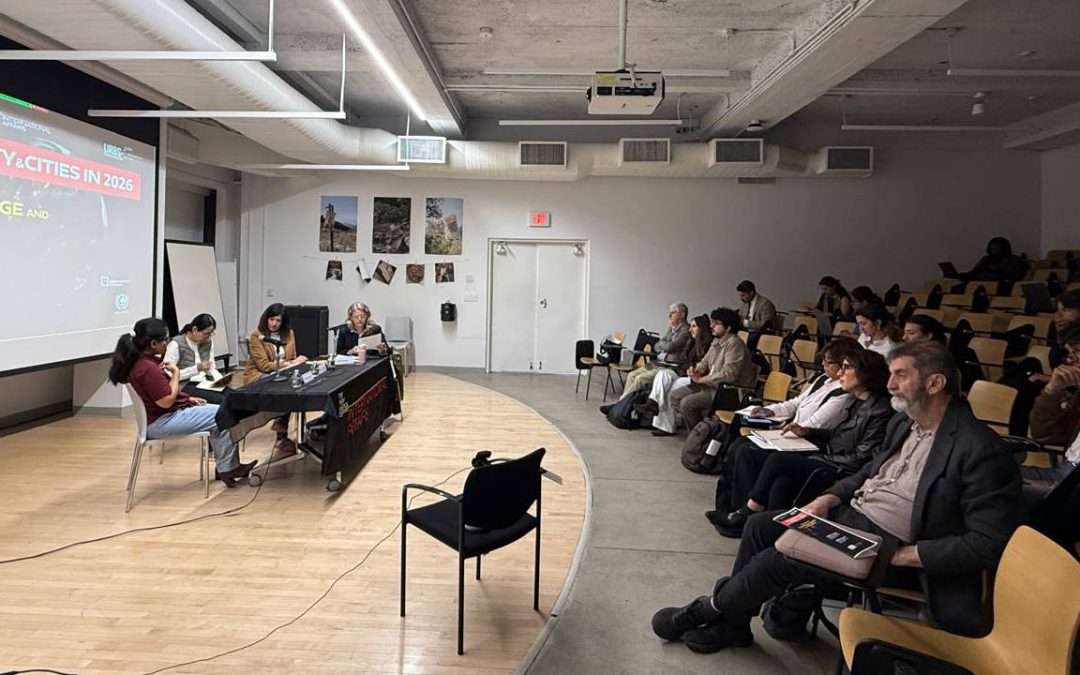
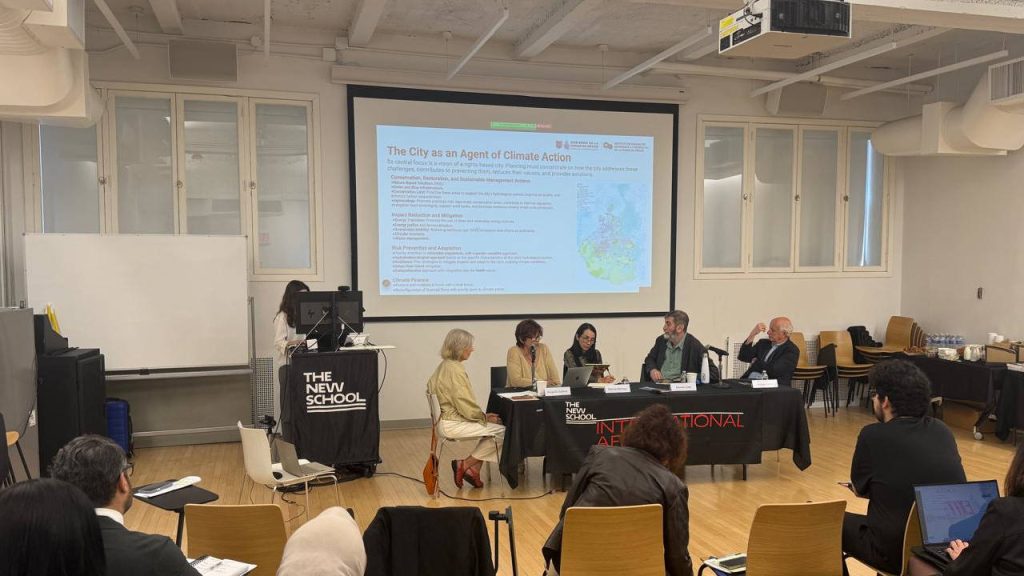
The conference was held at the New School in New York on April 13-14, 2026. There were 25 speakers in the conference which was attended by 120 people over two days. The Conference was opened by Joel Towers, President of the New School, and included the participation of Alex Aleinikoff, Executive Dean of the New School for Social Research, Lara Penin, Vice President of The New School for City Initiatives, and by video from Nairobi, Anaclaudia Rossbach, Executive Director of UN Habitat.
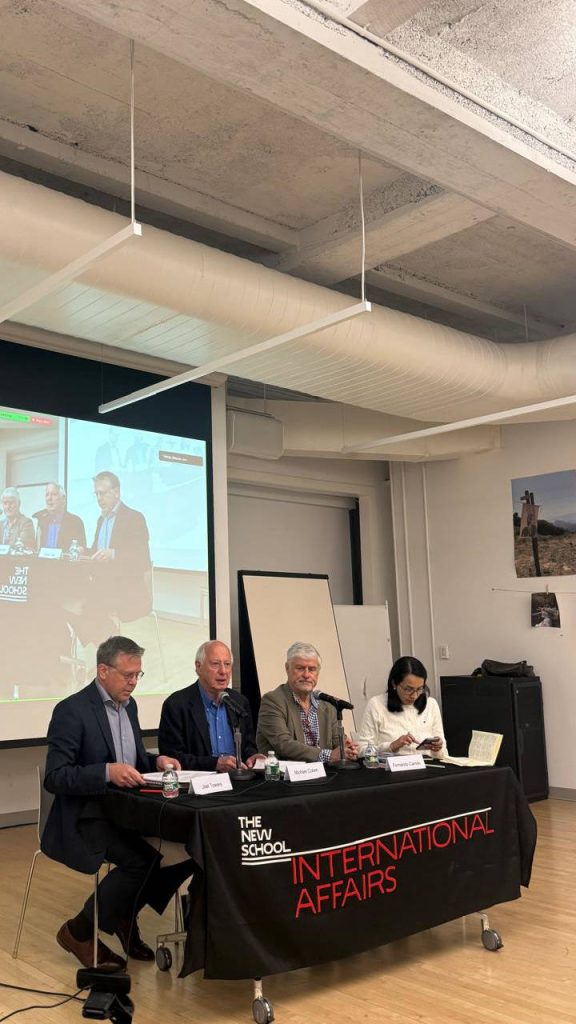
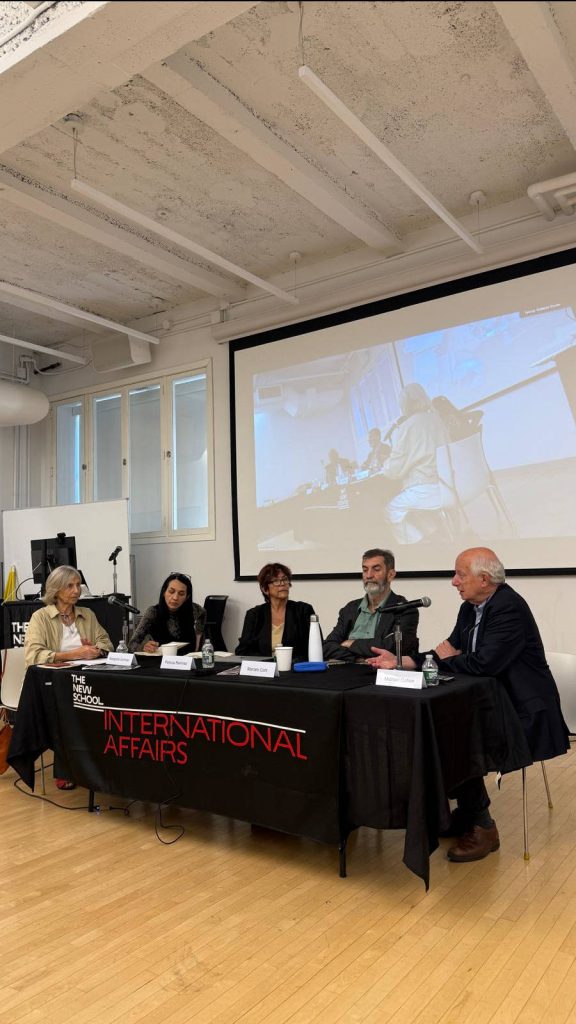
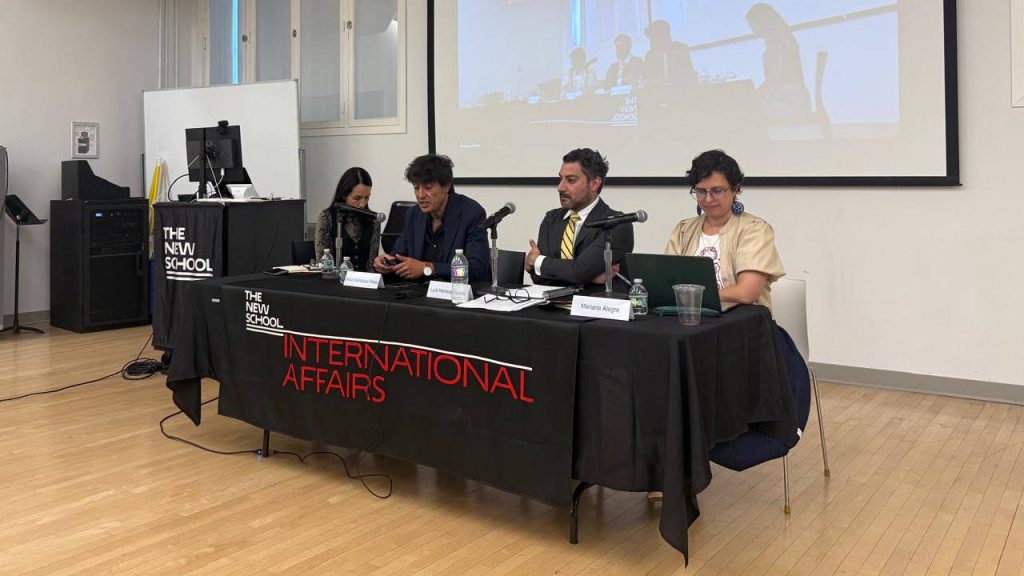
Speakers included academics from 11 countries: the US, Argentina, Brazil, Ecuador, Germany, Ghana, India, Japan, Mexico, Peru, and Spain, as well as two well-known journalists from The New York Times, Ana Swanson and David Wallace-Wells, and members and officials of URBISTIC, UN Habitat, Enrique Silva, Chief Program Officer from the Lincoln Institute of Land Policy, and included Patricia Ramirez-Kuri, the elected President of Planning Institute of Mexico City, Mariana Alegre, from Como Vamos in Lima and the Harvard Graduate School of Design, Luis Herrera-Favela from UN Habitat, Ian Klaus from the Carnegie Institution for International Peace by video from California, and several New School faculty including Professors William Milberg, Sakiko Fukuda-Parr, Michael Cohen, and Margarita Gutman, Professor Emeritus.
The conference focused on three kinds of uncertainty: the effects of tariffs, climate change, and politics, which, in 2026, are having significant effects on the capacity of urban areas to provide needed employment, incomes, infrastructure, and social services to their residents. In addition, speakers focused on the idea of democracy within cities and the need to maintain it and noted that cities do not only have to provide services and opportunities, but also preserve democratic institutions.
Tariffs: The relatively new substantive contribution of this event was a focus on the role of US tariffs in reducing national and local production and manufacturing in exporting countries, with attendant effects on national and municipal revenue, in both the Global South and in industrialized countries. These developments add to the global evidence showing that macro-economic policies have significant effects on urban economies. This is extremely important because it is now globally recognized that urban economies are contributing on the order of 80% of GDP in many rich and poor countries.
Uncertainty has been deepened and broadened as a result of the tariffs, with documented effects in countries such as Bangladesh, India, Vietnam, Lesotho, Canada, Germany, and South Africa. Conference presentations and a lively debate among members of the panel which included Professors William Milberg and Sakiko Fukuda-Parr, referred to these examples, showing that there is considerable variation across the global value chains in different sectors, whether for garments, cars, electronics, or pharmaceuticals, and different responses of firms depending on their place in the respective value chains. Studies cited by Ana Swanson illustrated these variations as well as the broader global impacts.
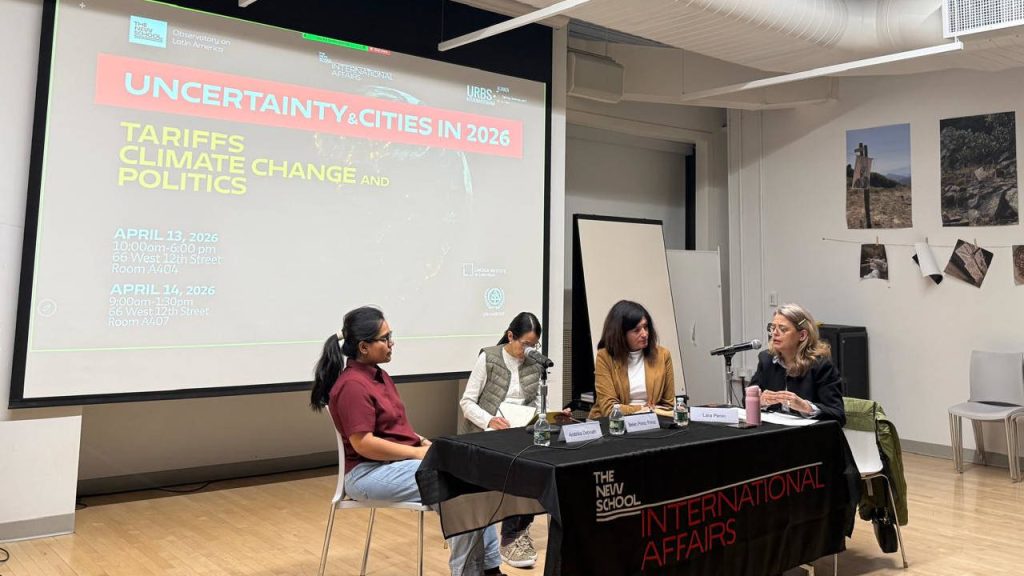
This segment of the conference also included discussion of draft papers presented by New School doctoral students: Eunice Offei and Charlisa Goodlet, on the state, local, and municipal impacts of tariffs, including reductions in municipal employment, municipal revenue, and the availability of budgetary support to respond to a growing demand for municipal assistance in the face of extreme weather events, public health problems, and continued demographic growth in urban areas. Enrique Silva noted that together these processes are consolidating what was termed “urban precarity”.
Initial evidence on the issue of impacts of the tariffs was cited in both papers. Silva also commented on these presentations and raised questions about how to assesses impacts on land markets as well as the need for more effective urban policies, subjects which will be addressed in the next phases of the research.
The discussion of the tariffs was followed up by a very productive 3-hour research methodology workshop held on April 15, attended by people from Montreal, Bangkok, Mexico City, and Washington, which focused on calibrating methodologies across planned case studies included in a recently launched comparative research project on the impacts of tariffs on countries, sectors, cities, and workers.
As noted above, the latter includes assessing how effects on municipal economies could affect local land markets, housing costs, and local public revenue. The Montreal Office of UN Habitat presented an elaborate framework for assessing the susceptibility of municipalities to the consequences of tariffs. Minh Tam Bui, a Vietnamese researcher based in Bangkok, spoke about research she is starting with Professor Sakiko Fukuda-Parr in Vietnam about the garment sector. Charles Kenny of the Center for Global Development (CGD) in Washington spoke about the Tariff Tracker Project being carried out by his institution.
Climate Change: The panel on climate change included the presentation of a research project now underway by Aratrika Debnath which focuses on climate migration and assesses the types of urban impacts resulting from climate change. Commentary on these issues was provided by Professor Belen Perez Perez from the University of Granada about strategies for alternative energy usage in cities. This issue was also raised by Patricia Ramirez Kuri of the Planning Institute of Mexico City who reported on how the changing climate was affecting the natural environment of the State of Mexico in which Mexico City is located. Professor Marcelo Corti from the University of Cordoba in Argentina mentioned the urgent need to give more priority to climate issues in urban policy.
Politics: Following a talk on Latin American political developments by Fernando Carrion, President of URBISTIC, NY Times journalist David Wallace-Wells spoke about evolving political groups in US cities and how some cities such as New York, Seattle, Denver, and Los Angeles, had elected progressive mayors who were experimenting with political issues having considerable progressive support.
Guided Visit to East Harlem: Five conference delegates from Argentina, Ecuador, and Mexico met on April 15 with Democratic Party Congressional candidate, Oscar Romero, in East Harlem, and walked around the neighborhood to gain a firsthand view of the current physical and social conditions and to learn about the policy issues under discussion in the upcoming June 2026 primary elections.
Assembly of URBISTIC Board
Taking advantage of the presence of eight members of the URBISTIC Board, the second meeting of the Board was held on the afternoon of April 14 to discuss issues related to the membership and governance of URBISTIC. It was agreed that URBISTIC could benefit from expanding its membership and inviting various institutions in Latin America, the United States, Canada, and Europe to join. It was further agreed that URBISTIC would seek to hold another major conference in 2028, possibly linked with the UN Habitat’s World Urban Forum to be held in Mexico City.
Recommendations and Follow-Up
The general issue of uncertainty stimulated discussions about follow-up research and case studies as mentioned above.
The Conference raised a lot of interest in understanding more about the role of tariffs in affecting urban economies. The interest generated in the Conference was quite visible and promising at the Research Methodology Workshop held on April 15 at which each case study of a proposed comparative research was discussed. A network of urban tariff researchers is being created and it hoped that there will be continued exchanges about methodology and results.
We also expect that an edited book manuscript of conference papers will be produced for consideration for publication.
Conference Administration:
The Conference was organized by Michael Cohen from The New School and Fernando Carrion from URBISTIC. Rebecca Snyder, Coordinator of the OLA, and Amanda Jorri, OLA Associate and doctoral student, managed conference logistics in New York. Fernando Carrion was supported in Quito by Emilia Nicole Silva Arias and Mario Sebastian Rodriguez. Amanda Jorri and Belen Fodde also supported the Tariff Research Workshop.
Tags: Conference, Economy, Inequity, Politics, Public Policy, Urban Development, Urban Economy, Urban Governments, Urban Inequity