• ONLINE: Futures of the Past · First Panel Discussion

    Online

    The panelists will address the futures of the past from very different sources: popular imaginations of Buenos Aires at the beginning of the 20th century reflected in illustrated magazines, contrasted with the imaginations of experts in urban planning; the conception of space-time in Quechua culture and how this questions linear views of time; and, in a shift in focus, the reimagining of the early 21st century from hypothetical interviews conducted in 2066.
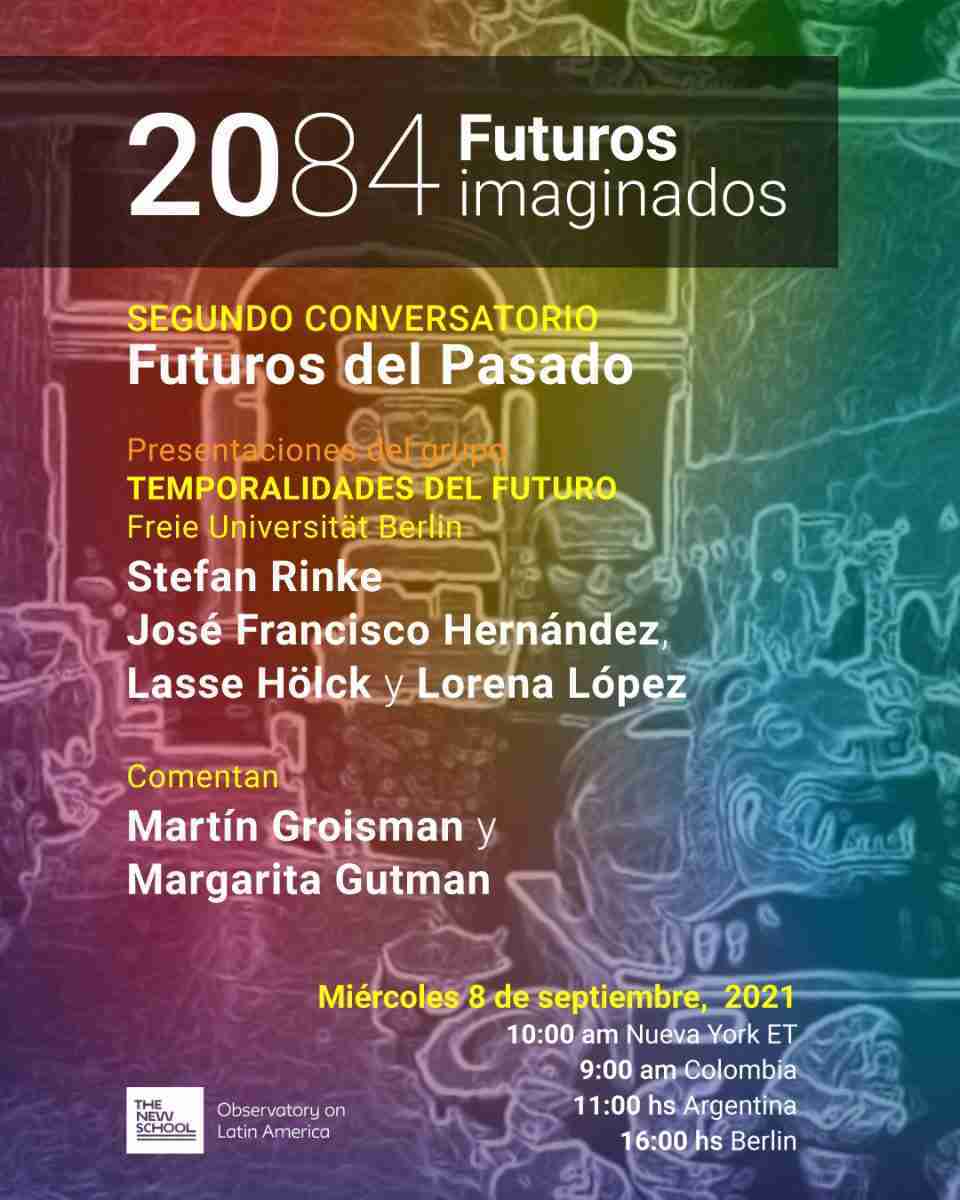
  • Futures of the Past · Second Panel Discussion

    Online

    In this second discussion on the history of the future, academics from the Temporalidades del Futuro group: Lorena López, José Francisco Hernández, Lasse Hölck and Stefan Rinke, will participate: Comments will be offered by Martín Groisman and Margarita Gutman.

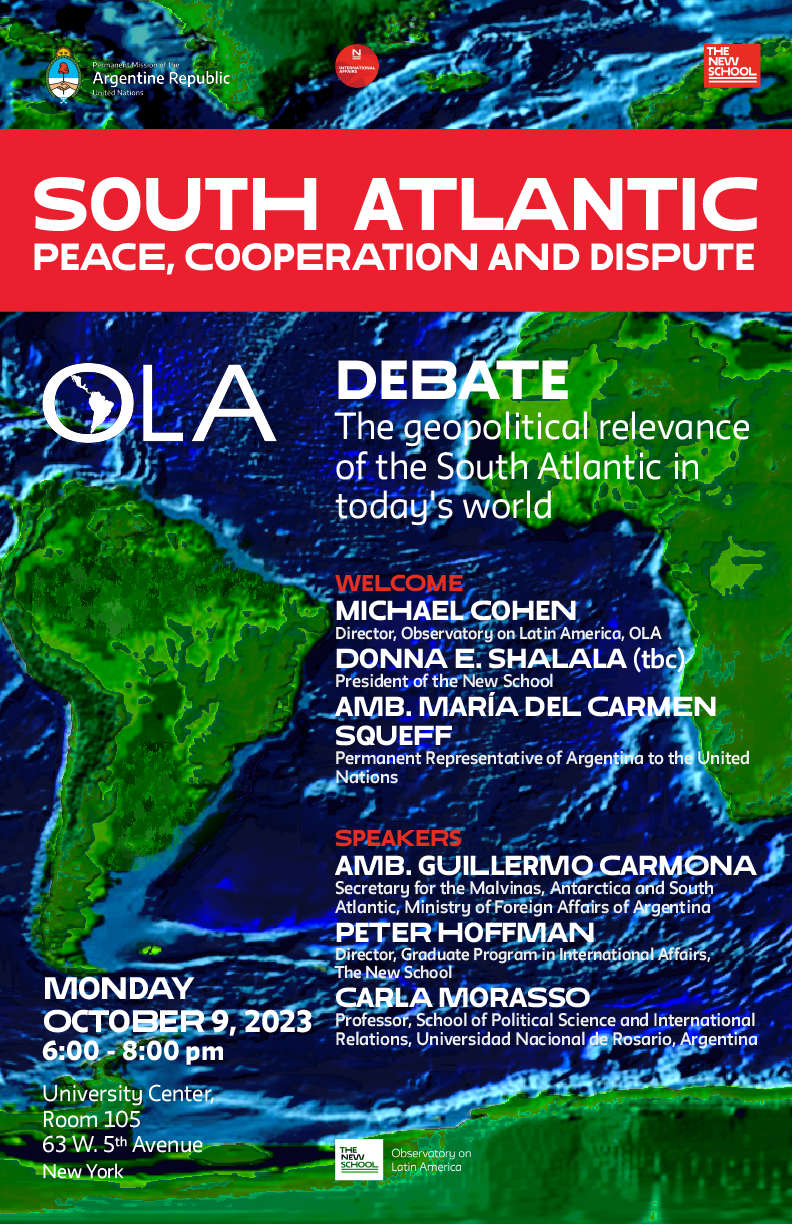
  • South Atlantic: Peace, Cooperation and Dispute

    UL 105 - Hoerle Lecture Hall, The New School University Center 63 5th Ave, New York, NY, United States

    This public event will examine the old and new geopolitical challenges in the South Atlantic

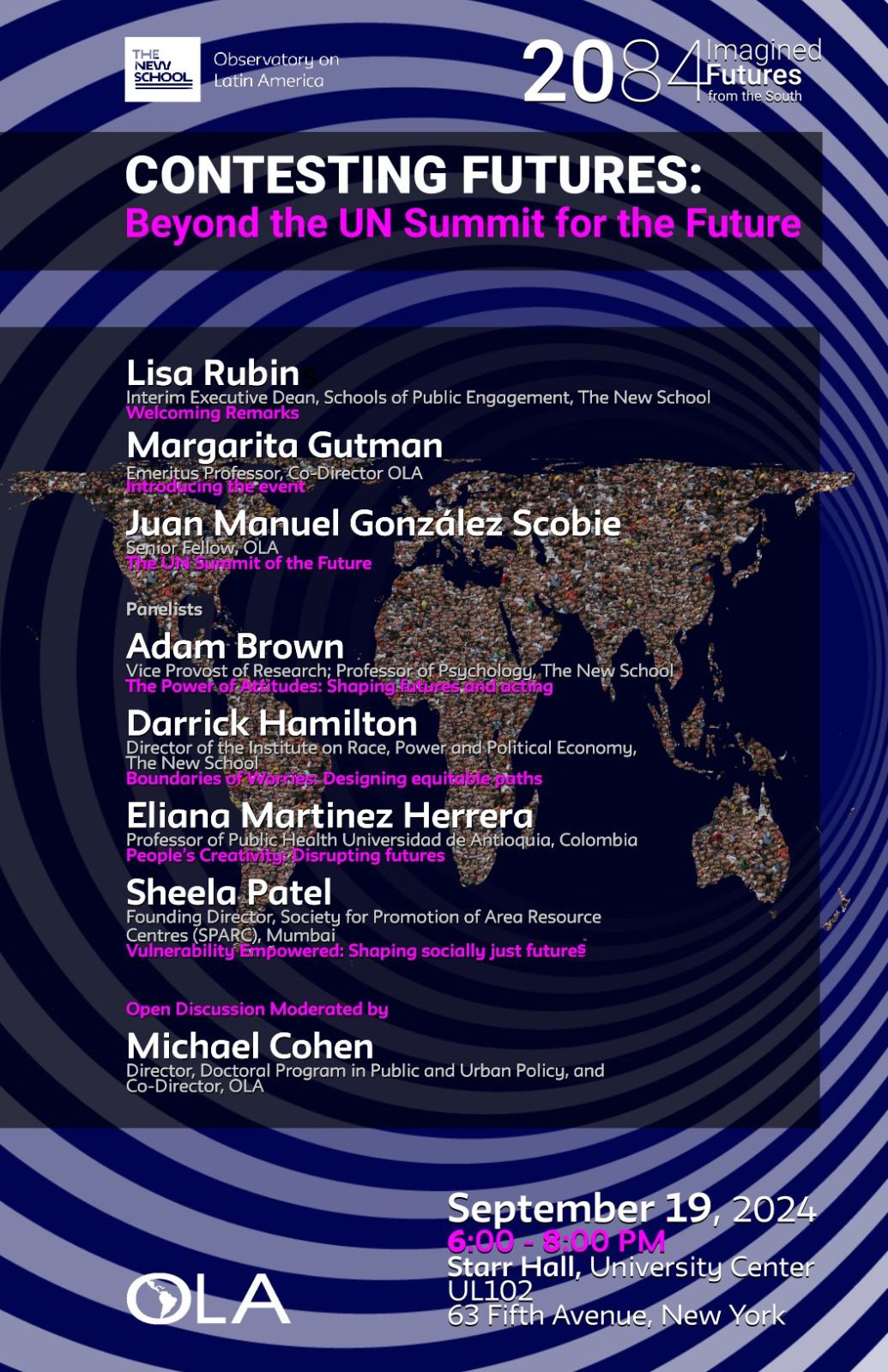
  • PANEL · Contesting Futures: Beyond the UN Summit for the Future

    Starr Hall, University Center, UL102 63 Fifth Avenue, New York, NY, United States

    Is the UN approach to the future ambitious enough? Does it represent the aspirations of the diversity of peoples around the world? Can it empower nations, communities, and cultures to identify their paths to fulfill their own expectations, desires, and capacities?

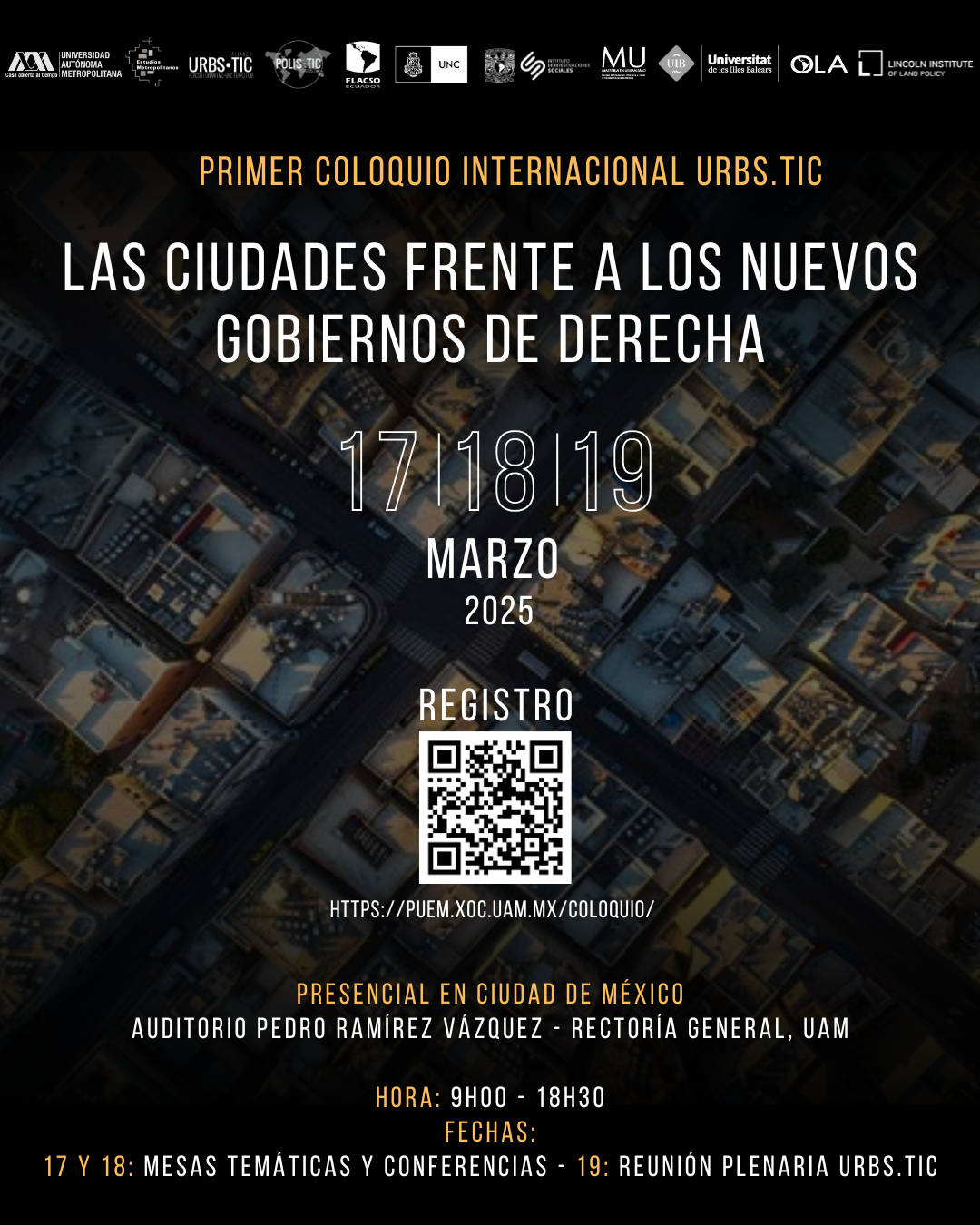
  • “Cities Facing the New Right-Wing Governments” International Colloquium

    Auditorio Pedro Ramírez Vázquez, Rectoría General, UAM. Ciudad de México Prolongación Canal de Miramontes 3855, Ex Hacienda San Juan de Dios, Tlalpan, 14387, CDMX, Prol. Canal de Miramontes 3855-interior 1, Los Colorines, Tlalpan, Mexico, Mexico

    This event will bring together researchers from Latin America, North America, and Europe to discuss the main contemporary urban challenges. Over two days of conferences and thematic panels, topics such as urban development, planning, inequalities, low-income housing, urban violence, and urban neoliberalism will be addressed.